

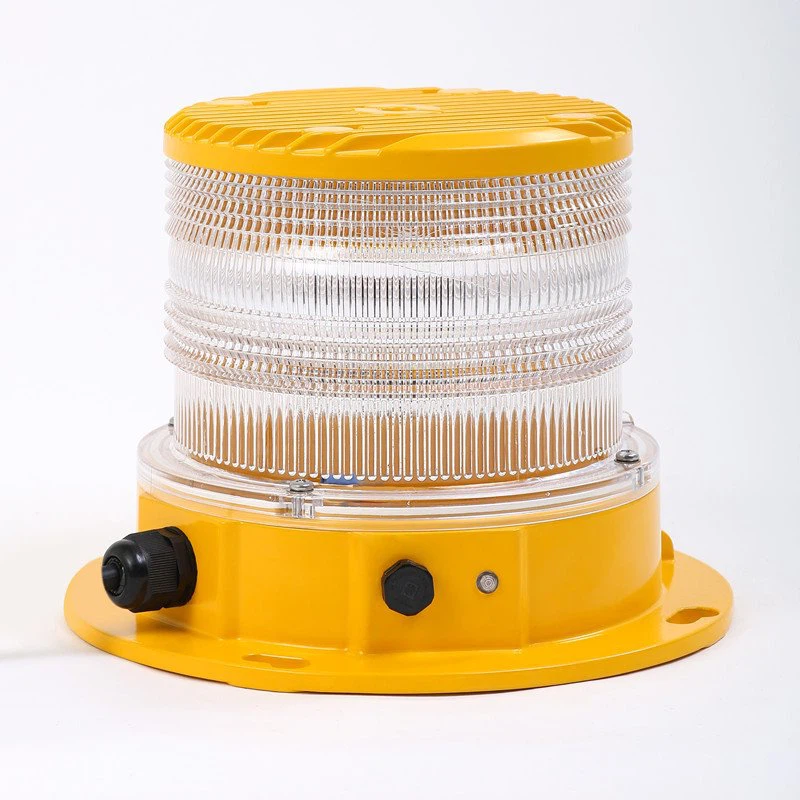
Our company adheres to relying on technological progress, adopting advanced technology and introducing advanced equipment, and is committed to the development of Approach Centerline Light, LED guidance signs, heliport obstacle light. We integrate the spirit of enterprise into every service detail to provide efficient, safe and fast services to our customers. We attach great importance to product quality. Before the products are put on the market, they have undergone professional application inspections, and have been continuously optimized and improved, so that the products have a high degree of quality reliability. Faced with the challenges of the 21st century, companies are in the same position as competition and development, seeking development and prosperity and succeeding in becoming the consensus of the corporate world. The company adheres to the tenet of "survive by quality, develop by variety, and serve users in everything", and wholeheartedly provide users with high-quality products.
Medium Intensity Type B tower lights aviation aviation lamp for chimney aviation lamp for tower faa approved obstruction lights aircraft warning beacon medium b obstruction light
China Medium intensity obstruction light B type,
China Medium intensity obstruction light type B,
Customized Medium intensity obstruction light B type,
China Medium Intensity Type B,
Medium Intensity Type B factory,
China Medium B obstruction light,
Customized Medium Intensity Type B.
Product Specification

With the development of society, today's aviation obstruction lights are no longer limited to high-altitude buildings, airports and other occasions, and their functions are not limited to lighting. More and more occasions begin to use this high-brightness equipment, and Many functions have been developed.
What are the main applications for the aviation lights especially for the medium intensity type B light?
1. Traffic directional sign lighting
This is a common application occasion, which is more common in high-altitude buildings, airports, docks and other traffic places, and is the main application place.
2, Task lighting
Large-scale outdoor operations are often dangerous, and lighting is very important. Traditional lamps cannot meet the needs in terms of range and brightness. Aviation obstruction lights are a good choice.
3, Outdoor decoration
(1) Patterned beam lamps: precisely design the light outlet and control the length of the light spot. Combining this type of lamps can become a different kind of light art work;
(2) Projection lamps on wall or cylinder;
(3) Decorative lawn lamp: A lawn lamp with design meaning, the luminous part is designed into various structures such as ring-mounted, partially illuminating the lawn; at the same time, it also becomes a decorative element in the environment.
According to the requirements of modern building exterior lighting, miniaturization of lamps is the development trend of aviation obstruction lights. The light outlet can be one-way or up and down. The lamps can be designed in groups to be combined to meet the needs of serialization of light effects. On the one hand, it can be used as ambient lighting, on the other hand, it can be used as self-luminous decorative lighting or guide lighting.
1 Technical Parameters
1.1 Dimensions (mm)

1.2 Technical Parameters
The following parameters are obtained under normal temperature test. (25℃)
|
Item of Test |
Parameters |
||
|
Model |
FL-L864 |
||
|
Structure Parameter |
Nominal Dimension |
Φ232*128mm |
|
|
Installation Dimension |
SEE BELOW |
||
|
Material of Lamp Panel |
Aluminum Die Casting |
||
|
Material of Cover |
PC |
||
|
Electrical Parameter |
Rated Power |
≤40W |
|
|
Input Voltage |
AC176V-264V/DC48V |
||
|
Optical Parameter |
Light intensity |
Background brightness |
Light intensity |
|
<50 cd/㎡ |
2000±25% |
||
|
Light source |
LED |
||
|
Light color |
Red |
||
|
Operating mode |
Operating mode |
20-40 flashes/min(adjustable) |
|
|
Other Parameter |
Operating tempt. |
-40~+55℃ |
|
|
Wind load |
60m/s |
||
|
Protection |
IP66 |
||
|
Weight |
2Kg |
||
Classification and naming of aviation obstruction lights
Aviation obstruction lights are divided according to the height of the installed obstacle and the flashing mode and frequency:
A-type low-intensity obstruction light, red light, constant light
B-type low-intensity obstruction light, red light, constant light
C-type low-intensity obstruction light yellow/blue 60~90 flashes/min
D-type low-intensity obstruction light yellow light 60~90 flashes/min
Type A Medium Intensity Obstacle Light White glowing 20~60 flashes/min
Type B Medium Intensity Obstacle Light Red glowing 20~60 flashes/min
C-type medium intensity obstruction light, red light, constant light
A-type high-intensity obstruction light white light emitting 40~60 flashes/min
B-type high-intensity obstruction light white light emitting 40~60 flashes/min
There are no relevant regulations on naming. The naming of aviation obstruction lights shall be based on the actual conditions of each certified manufacturer, as long as they are set up, purchased and installed in accordance with the new aviation obstruction light specifications of the Civil Aviation Administration of China.
2. How to connect aviation obstruction light control box and aviation obstruction light?
When the number of aviation obstruction light lamps is large, you can control by purchasing the aviation obstruction light sub-light + aviation obstruction light control box.
The following content is only for HGF (HGF) aviation obstruction light control box and aviation obstruction light.
1. Conventional aviation obstruction light control box
The conventional aviation obstruction light control box has its own light control probe, which can be installed indoors or outdoors. When installed indoors, the light control probe needs to be led to a place where there is no direct light exposure and good light can be felt outside. When installed outdoors, the light control probe is directly integrated in the control box.
During installation, it is necessary to connect the power cord of the lamp (aviation obstruction light auxiliary light) in parallel with the power cord of the aviation obstruction light control box, and the signal line and the signal line of the aviation obstruction light control box are connected in parallel. A four-core cable is required. Just connect. The aviation obstruction light control box can work normally when energized.
2. Monitoring type aviation obstruction light control box
The monitoring type aviation obstruction light control box is also divided into indoor and outdoor modes. Different from the conventional controller, the monitoring aviation obstruction light control box requires two three-core cables for connection and wiring. The signal line of the aviation obstruction light control box is connected with the power line and the signal line and power line of the lamp. Wrong connection will cause the lamp to work abnormally. If the signal line is mistakenly used as a power line and connected within a short time (approximately 4 hours), it will not cause damage to the lamp and the controller. If the time is too long, it may cause irreversible damage to the lamp and the controller.
3. Installation
3.1 Schematic Diagram
1. Humidity: -40℃-+55℃;
2. Relative humidity: 0%-95%;
3. Wind force: 240km/h;
4. Rain: When it rains, the wind direction can be in any direction;
5. Salt fog: The air contains salt fog.
3.2 Instruction
a) Please read carefully the product specification before using the driver to make sure the operation environment can meet the requirement as per the specification.
b) While connecting the tube to the power, please make sure the switch is "off".
c) Do not disassemble the lamp by yourself.
5. Standard
There are a medium-intensity white strobe and a high-intensity white strobe. Medium-intensity white strobes are usually used on structures that are between 61-152.4m, If a medium white strobe is used on a structure greater than 152.4m, the structure must be painted. The common medium white strobe flashes 40 times per minute, at an intensity of 20,000Cd for daytime/twilight, and 2,000Cd at nighttime.
5.1 Medium intensity type B light, International Civil Aviation Organization, annex 14, volume 1, 7th edition, "airport design and operation", July 2016, table 6.3.

Background knowledge:
The lowest price of aviation obstruction lights:
The price of aviation obstruction lights is the lowest, and the price of aviation obstruction lights that do not have civil aviation qualifications is the lowest. Compared with aviation obstruction lights with civil aviation qualification announcement information tables and test reports, the price is beyond imagination.
The price of aviation obstruction lights is the lowest, and every friend who comes to consult wants to buy aviation obstruction lights at the lowest price. This is understandable. Because everyone hopes to get what they want with very little cost. Shop around and choose the most suitable or lowest-priced obstruction light manufacturer among the three for cooperation. However, when making comparisons, it is necessary to keep in mind the range of comparison between prices. Compare obstruction light manufacturers with civil aviation qualification announcement information table and test report, and compare obstruction light manufacturers without civil aviation qualification. Compare with those with civil aviation qualifications. This is unfair to obstruction light manufacturers with civil aviation qualifications. If you want to do this comparison, it is recommended that you directly buy products from manufacturers that do not have civil aviation qualifications.
The civil aviation qualification notice information sheet and test report are reviewed every two years for quality consistency audit. Products with the civil aviation qualification notice information sheet and test report have strict requirements on the raw material manufacturers, incoming inspection standards and specifications of key components Detailed requirements. There is a mandatory requirement for the production area of aviation obstruction light manufacturers to be no less than 1,000 square meters. Aviation obstruction lights need to meet the light intensity requirements, flash frequency requirements, control requirements and other requirements of the latest standards and specifications.
Manufacturers who do not have civil aviation qualifications only need to ensure that the lights are on. As for how long they can be on, and how bright the light is, these are not within the scope of consideration.
Therefore, when comparing prices, please make sure that the obstruction light manufacturers you are comparing are all qualified or not qualified for civil aviation.
The Civil Aviation Administration officially promulgated the "Regulations on the Management of Special Equipment for Civil Airports" on May 14, 2016. It is clear that the use of aviation obstruction lights that do not have civil aviation qualifications requires both the user and the manufacturer to bear civil or criminal liability.

China Medium obstacle light A,China Medium Intensity Type B,China Heliport Portable Light,China taxiway middleline light,China Heliport Touchdown Light.
Medium-intensity Type B aviation obstruction lights, also known as Mid-B lights, are widely used in various structures such as chimneys, high-rise buildings, and bridges to warn nearby aircraft of potential hazards and prevent collisions. These lights are designed to comply with the requirements set by the International Civil Aviation Organization (ICAO), the worldwide regulatory body for the aviation industry.
Mid-B lights are essential for ensuring aviation safety, particularly for tall buildings, towers, and other high structures. They are typically installed on the highest point of a structure and emit a steady red light that is visible from a distance of up to 5 nautical miles (9.3 km) during nighttime and adverse weather conditions. They are also equipped with an automatic daytime switch to ensure that they turn off during daytime when their visibility is low and turn on at sunset or low visibility conditions, according to ICAO's guidelines.
Technical specifications of Mid-B aviation obstruction lights
Mid-B lights must meet several technical specifications to comply with ICAO's guidelines. Here are some of the most essential technical details that these lights should meet:
1. Luminosity: Mid-B lights should produce a steady red light with a minimum peak intensity of 2,000 candelas (cd) at night.
2. Vertical beam spread: The minimum vertical beam angle for Mid-B lights should be 10 degrees, and the maximum beam angle should be 23 degrees (± 3 degrees).
3. Horizontal beam spread: The minimum horizontal beam angle for Mid-B lights should be 360 degrees, and the maximum beam angle should be 8 degrees (± 1 degree).
4. Power source: Mid-B lights can operate on either AC or DC voltage, depending on the operational requirements of the system. They must have a backup power supply, such as a battery or generator, to ensure they remain operational during power outages or faults.
5. Mounting height: The minimum and maximum mounting height for Mid-B lights are determined by the structure's height and proximity to the aerodrome. For instance, if the structure's height is below 150 meters, the minimum mounting height for Mid-B lights should be 45 meters above the ground level.
6. Flashes per minute (FPM): Mid-B lights can be either flashed or steady, depending on the operational requirements. If they are flashed, the FPM should be between 20 and 60.
7. Compliance: Mid-B lights should comply with the international standards established by ICAO, such as Annex 14, which provides guidance on aerodrome design and operations, and ICAO Document 4444, which provides guidance on air traffic management procedures.
Applications of Mid-B aviation lights
Mid-B lights are primarily used in structures that are significant aviation hazards like tall buildings, television and radio towers, bridges, and other structures that pose risks in the airspace. They warn pilots of these high-risk structures, making them visible from a great distance, especially in low-light conditions or bad weather. Some of the common applications of Mid-B aviation obstruction lights include:
1. High-rise buildings: Mid-B aviation obstruction lights are installed at the top of high-rise buildings, to ensure they are visible from long distances and avoid any accidents with aircraft.
2. Television and radio towers: These lights are installed on television and radio towers to ensure they remain visible to aircraft and avoid collision.
3. Wind turbines: Mid-B aviation obstruction lights are mounted on wind turbines to outline their height, and they remain visible to pilots from long distances.
4. Bridges: Bridges can be a major obstacle for low-flying aircraft, and Mid-B lights are installed to warn pilots of their presence and avoid any safety hazards.
Benefits of Mid-B aviation obstruction lights
1. Safety: Mid-B aviation lights are a crucial safety measure for aviation and help prevent accidents from occurring.
2. Reduced risk: These lights ensure that pilots can identify obstacles from a significant distance; thus, they help to mitigate the risks of collisions.
3. Compliance: Mid-B aviation obstruction lights meet the ICAO standards for aviation safety, making them a globally recognized solution.
4. Cost-effective: Mid-B lights are an affordable option for aviation safety, and they come in a range of options that suit different requirements.
5. Ease of installation: Mid-B lights are easy to install, and they require minimal maintenance, making them a reliable solution for aviation safety.
Conclusion
Mid-B aviation obstruction lights are a critical safety feature of airspace around tall buildings, towers, and other high structures. These lights are an essential aid for pilots, ensuring they can identify obstacles safely and avoid accidents. Mid-B lights are designed to comply with ICAO's regulations, making them a globally recognized safety feature. The technical specifications for these lights are designed to meet the highest standards of aviation safety and provide a range of options to suit different operational requirements.

To create more value for customers is our business philosophy; customer growing is our working chase for Medium-Intensity LED Red Flashing Type B Obstacle Light Xh-MB (L). We will continue to search, and we are willing to walk with all our partners all the way to achieve the future and build a great cause together! We have been constantly introducing foreign precision equipment and exquisite technology.