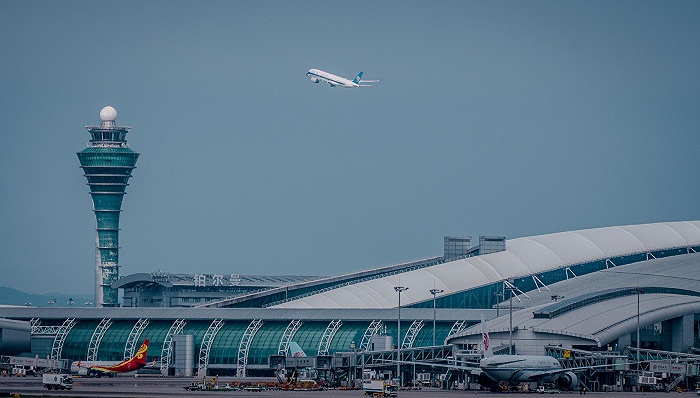
Wings of Dawn: A brief discussion on the trends of civil aviation industry in 2024
The global civil aviation industry has achieved a comprehensive recovery and further improved profitability in 2023 when the haze of the epidemic has further dissipated. According to the prediction of the International Air Transport Association (IATA), the total revenue of the global aviation industry will reach 896 billion US dollars in 2023, achieving a growth rate of 9.7%. annual growth. From the perspective of the macro environment, despite the many geopolitical uncertainties, global GPD will still maintain a growth rate of around 3% in 2024. Moreover, with the slowdown in the pace of U.S. dollar interest rate hikes, the slowdown in inflationary pressures, and the Chinese economy With the further recovery, passenger and cargo commercial flights will continue to increase. Therefore, after entering 2024, the resilience of the aviation industry will be further reflected and the recovery momentum will be further strengthened. However, on the premise that the industry as a whole is improving, there are several specific trends that deserve our attention. This article will make some brief analysis of these trends in order to attract attention.
1. The signs of industry recovery are more obvious and airlines' profitability is enhanced
According to predictions by the International Air Transport Association (IATA), global air passenger volume will exceed 4.7 billion passengers and revenue will reach US$964 billion in 2024, while freight will also show rapid growth, with revenue expected to reach US$111 billion. Judging from current data, in 2024, the capacity invested by global airlines will finally exceed that of 2019 and achieve a positive growth of about 10%. Among them, the Asia-Pacific region has the most eye-catching performance, with an annual growth rate of nearly 30%, while North America Although regional growth has weakened, the growth rate is still above 10%. Starting from 2024, the growth of the global aviation market will become more normalized.
In addition, although the phenomenon of high fares due to limited capacity investment in the past two years will come to an end, airlines will focus on increasing load factors and market share. And as the cost side of airlines gradually stabilizes, airlines will The company's profit margins will further increase.
2. The voice of traditional large airlines continues to increase
Although passenger travel will increase in 2024, overall, the number of airlines that can take us to our destinations is decreasing. Airlines have been merging for decades to maximize economies of scale, a trend that has accelerated in the post-pandemic years, with Lufthansa Group, Air France-KLM Group and IAG in Europe IAG) are generally known as the three giants in aviation, but they may become even bigger in 2024.
In May last year, Lufthansa Group acquired 41% of the Italian national airline ITA Airways. At the same time, at the end of September last year, Portugal confirmed the sale of at least 51% of the controlling stake in TAP Air Portugal, and many companies have expressed interest. . Just days later, Scandinavian Airlines (SAS) sold a 20% stake to a consortium including Air France-KLM Group, and many analysts believe this proportion may increase over time. These integrations will continue in 2024.
After the epidemic, airlines have to restructure their cost structures. Traditional large airlines not only have advantages in scale, but also have advantages that small and medium-sized airlines cannot match in key factors such as route times, aircraft introduction, talent, and funds. This is This is more obvious in the special domestic market and regulatory environment. Therefore, different forms of integration will continue, and the voice of traditional large airlines will continue to increase.
3. The tight capacity will continue
In 2024, due to the double impact of the speed of new aircraft delivery and Pratt & Whitney engine problems, the capacity shortage of global airlines will continue to exist. Although Airbus delivered 735 aircraft and Boeing delivered 528 aircraft in 2023, this still cannot meet the airline's capacity planning. Coupled with limited supply chain resources, aircraft delivery problems may continue until after 2025.
At the same time, many airlines are frustrated that the Pratt & Whitney engine problems may get worse in 2024, continuing to exacerbate the problem of airline capacity constraints.
In addition, on January 7, an emergency hatch (door plug) of a Boeing 737 MAX9 aircraft of Alaska Airlines in the United States fell off shortly after takeoff. This incident resulted in the grounding of 171 aircraft of this type worldwide for inspection (there is currently no such aircraft type in China). Although the subsequent impact remains to be seen, it will undoubtedly further exacerbate the problem of airline capacity constraints.
4. "Sustainable development" has become a common topic
During the year of the epidemic, the global aviation industry suffered a lot, and sustainable development took a back seat, but now this topic has become a normal topic in the aviation industry. Among them, sustainable aviation fuel (SAF) is the most critical topic, which will receive further attention in the coming year and beyond. According to estimates from the International Air Transport Association (IATA), SAF is expected to contribute approximately 65% of emissions reductions by 2050 to achieve the aviation industry's goal of zero emissions. However, in 2024, although SAF's production will increase to 1.875 billion liters, it will still be far from meeting the needs of the aviation industry. To achieve the 2030 goal of reducing carbon dioxide emissions by 5%, the world needs to produce approximately 17.5 billion liters of sustainable aviation fuel.
low intensity light type A price,low price Airport Crossbar Light,
low intensity light type A suppliers,Customized low intensity light type B.
In recent years, in order to achieve the aviation industry's 2050 net-zero emissions goal, many countries and airlines have been actively exploring the expansion of the application of sustainable aviation fuel and promoting the green development of the aviation industry. Domestically, in April 2023, Airbus and China Aviation Fuel Group Co., Ltd. signed a memorandum of cooperation to strengthen cooperation between China and Europe in the production, application and development of standards for sustainable aviation fuel. This cooperation will increase the production of sustainable aviation fuel and optimize the supply chain, striving to increase the proportion of sustainable aviation fuel use to 10% by 2030.
5. The application of scientific and technological innovation continues to deepen
In 2024, many scientific and technological achievements accumulated for many years will bear fruit, and the application of scientific and technological innovation in the aviation industry will continue to deepen. In the field of unmanned electric vertical take-off and landing aircraft eVtol, more products close to real-life application scenarios will be released. For example, the German company Volocopter, which claims to be a "pioneer in urban air mobility," plans to launch its product at the Paris Olympics and Paralympics that may change the game. Regular eVtol. According to Volocopter, the aircraft will operate in the French capital from five small terminals known as "vertical ports." Domestically, on October 13, 2023, EHang Intelligent Holdings announced that the EH216-S unmanned manned aircraft system independently developed by EHang Intelligent has obtained the Type Certificate (Type Certificate, referred to as the Type Certificate for short) officially issued by the Civil Aviation Administration of China. "TC"), indicating that the model design of the EH216-S fully complies with the safety standards and airworthiness requirements of the Civil Aviation Administration of China, and is qualified for manned commercial operations of unmanned aircraft. "Flying away" will gradually become a reality.
At the same time, due to the rapid development of artificial intelligence and digitalization, airlines around the world have also deeply integrated these technologies into their operations. For example, Eihad Airways in the Middle East developed a reservation application BOTIM, where customers only need to enter basic information. , BOTIM can help complete all reservation services. In addition, Air India said it will deeply introduce artificial intelligence into its operations, while Amsterdam Airport uses artificial intelligence to enhance security procedures. Domestically, China Eastern Airlines has achieved in-flight wireless network coverage on more than 100 wide-body aircraft, and passengers can experience the first Asia-Pacific 6D satellite high-speed network during their journey. In addition, the concept of "smart civil aviation" has become a hot word in recent years, and many practical application scenarios such as airport security, consignment, retail, etc. will gradually be implemented.
All in all, although the civil aviation industry in 2024 will still face many problems left over from the epidemic, growth will be the theme. At the same time, the industry will undergo in-depth reconstruction and prepare for a better future under the influence of the two forces of technology and sustainable development. Get ready for a healthier and more resilient tomorrow, with wings of dawn and usher in the dawn.