

Did a flight divert due to thunderstorms cause passengers to kneel? Airlines respond! Experts: Civil aviation safety comes first
Solar low intensity obstruction light B type factory,
Solar low intensity obstruction light A type factory,
low intensity obstruction light B type manufacturers,
low intensity obstruction light A type manufacturers.
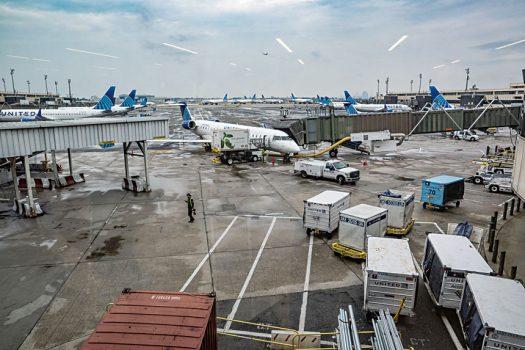
Recently, HNA Airlines flight HU7712 was forced to make an emergency landing in Taiyuan due to thunderstorms in Beijing, sparking heated debate. The flight, originally scheduled to fly from Shenzhen to Beijing, was diverted to Taiyuan at 10:47 PM due to weather conditions. A passenger on board, anxious to return to Beijing for surgery, emotionally knelt before the crew, pleading for a flight back to Beijing as soon as possible.
According to a statement obtained by HNA, the following appears to be unrelated information: On September 9th, HNA Airlines flight HU7712 (Shenzhen-Beijing) was affected by heavy rain in Beijing and made a safe emergency landing at Taiyuan Wusu International Airport at 10:47 PM. Accommodation and meals were provided to the passengers. For the 36 passengers who had to return to Beijing that evening, chartered buses were arranged to transport them overnight. A replacement flight arrived safely at Beijing Capital Airport at 12:57 PM on September 10th. For some passengers who chose to return to Beijing on their own, HNA will refund the fare for the unused segments.
Civil Aviation Resources Network expert Zhang Zhaohui pointed out that the passenger's kneeling was unnecessary. Flight matters must be handled by the pilot, as this is the core guarantee of aviation safety. According to the Civil Aviation Law of the People's Republic of China and the Tokyo Convention (1963), the captain is clearly defined as the highest administrative officer on board an aircraft. All persons on board (including passengers and crew) must obey the captain's orders within the scope of his authority, which naturally includes diversions. The captain's decision to divert was the most reasonable one within his authority. Legal authority, irreplaceable technical capabilities, and overall safety responsibility together constitute the legitimacy of the captain's decision.
According to a video circulating online, a passenger noted that the captain spoke first in English and then in Chinese during his announcement. HNA explained that, after verification, it was determined that because the captain on duty was a foreign national, according to the relevant provisions of the HNA operations manual, foreign captains may make announcements in English first, followed by Chinese assistance from Chinese personnel during flight operations.
Furthermore, the claim that the captain lacked the qualifications to land in rainy weather is unfounded. The diversion was made because the weather at the destination did not meet the standards for a safe landing.
Xu Lingjie, an expert at the Civil Aviation Resource Network and a professor at the Civil Aviation Flight University of China, stated: "Civil aviation safety comes first. Weather is the primary factor disrupting normal civil aviation operations. Failure to take off and land as planned due to weather is undesirable for both airlines and passengers. Passengers need to understand the unique nature of civil aviation and show understanding. There's no need to kneel or engage in other actions. Malicious speculation or even slander can impact more than just one individual or airline and could mislead the public's critical assessment of my country's civil aviation safety." Building a harmonious relationship between airlines and travelers will help protect passenger rights and promote the development of civil aviation.
Popular Science: Diversions are necessary, safety first!
Thunderstorms can cause flight delays, cancellations, or diversions. A diversion refers to a flight landing at an alternative airport when it is not possible or appropriate to reach the planned destination airport, or when the destination airport is unsuitable for landing. In layman's terms, a diversion is a planned termination of a flight to ensure flight safety due to special circumstances.
Generally speaking, if a flight needs to make an emergency landing shortly after takeoff, it will most likely choose to return. When the aircraft has completed halfway through its flight, the aircraft may choose an airport midway along the route that meets the aircraft's access standards. If the aircraft has already arrived near the destination airport, it may choose to make an emergency landing at a nearby airport that meets the aircraft's access standards.
Generally speaking, the main reasons for flight diversions or return flights are as follows:
Weather reasons: Due to inclement weather at the destination airport, such as heavy fog, strong winds, thunderstorms, or sandstorms, which are unsuitable for landing, a return or emergency landing may be made to ensure the safety of passengers.
Illness reasons: A passenger suddenly falls ill on board, so the aircraft can receive medical treatment as quickly as possible.
Mechanical failure: A mechanical failure occurs during flight that affects flight safety.
Emergency: An incident occurs on board that seriously affects flight safety, or an emergency at the destination airport prevents the flight from landing.
So why are diversions or return flights necessary? The most fundamental reason is to ensure the safety of everyone on board!
As early as 1992, the Civil Aviation Administration of China (CAAC) comprehensively outlined the concept and detailed provisions of the "Eight Do's and One Don't" in its "Order of the Civil Aviation Administration of China on Ensuring Flight Safety."
The "Eight Do's and One Don't" refers to: go around when necessary, penetrate cloud when necessary, return when necessary, make an alternate landing when necessary, circumvent when necessary, wait when necessary, remind when necessary, and take action when necessary. Blind and reckless actions are prohibited.
Although the "Eight Do's and One Don't" policy consists of only 54 words, it represents a summary of experience and practical application in ensuring flight safety. It provides a simple overview of how to implement flight regulations and relevant provisions and properly handle various situations encountered during flight.
Making the right choices promptly is a responsibility, a duty to every passenger on board.
The "Eight Do's and One Don't" is a unique safety culture of China's civil aviation industry. It has become a safety code of conduct for Chinese civil aviation pilots and plays a vital role in ensuring civil aviation safety.