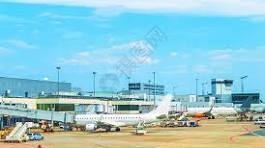
A man who falsely claimed there was a bomb at Qingdao Airport was eventually sentenced.
High intensity light type B price,
Elevated Obstacle Light suppliers,
low price Elevated Obstacle Light,
Customized Airport Guidance Signs,
According to the Beijing Youth Daily, at approximately 7:25 PM on November 18, 2019, the defendant, Wang Moushen, arrived at the domestic departure hall of Qingdao Liuting International Airport in Shandong Province, intending to board flight 8L9870 from Qingdao to Wuhan. Unable to check in due to his late arrival, he, out of spite, twice threatened to call the police, claiming there was a bomb on the flight, obstructing its normal departure. Despite being dissuaded and warned by staff, Wang Moushen still took out his mobile phone and pretended to dial 110 (the police emergency number), falsely claiming there was a bomb at Qingdao Airport.
Staff immediately reported the incident according to procedure and notified the flight crew, prompting the airport to activate its emergency response plan. The flight involved was cleared of passengers and cargo, and five other flights (including Wang Moushen and four others) were delayed by 9 to 86 minutes, severely disrupting the airport's normal operations and public safety.
Following the incident, Wang Moushen was arrested. The Chengyang District People's Procuratorate of Qingdao City filed a public prosecution against him for fabricating false terrorist information. The Chengyang District Court, in its first instance judgment, found Wang Moushen guilty of fabricating false terrorist information and sentenced him to one year and six months in prison. Wang Moushen appealed, but later voluntarily withdrew his appeal during the second instance proceedings. The second instance court granted the withdrawal, and the first instance judgment became legally effective.
Presiding Judge's Remarks
"Is 'There's a bomb on the plane' simply an emotional outburst, or a criminal offense? Where are the legal boundaries?" Wu Zhonglei, the presiding judge in this case, told the *Legal Daily* reporter that such behavior often stems from minor incidents like missed flights or disputes, with perpetrators frequently using "joking" as an excuse. However, aviation safety is paramount, and the consequences can be sudden and widespread.
Wu Zhonglei pointed out that the key to determining "serious disruption of social order" at airports lies in two points: first, whether the information is sufficient to cause public panic; and second, whether an emergency response mechanism has been triggered. "In this case, Wang Moushen twice claimed that there was a bomb on the plane, and even pretended to call 110 (the police emergency number) to amplify the threat, demonstrating direct intent. The airport activated its emergency plan, conducting a thorough search of the aircraft, resulting in delays of up to 86 minutes for five flights and triggering emergency responses from multiple departments-this far exceeds the scope of ordinary public security violations."
"Some argue that Wang Moushen was merely venting his anger over being late for check-in, and that his subjective malice was not significant," said Wu Zhonglei. "However, we believe that aviation safety is characterized by rapid risk transmission and a wide-ranging impact. A false bomb threat carries the waste of significant public resources and inconvenience for hundreds of passengers; the harmful consequences are very real."
Regarding sentencing, Wu Zhonglei stated that although Wang Moushen surrendered himself to the police, was a first-time offender, and pleaded guilty, his actions directly endangered aviation safety, and therefore, a strict punishment should be imposed. "The final sentence of one year and six months imprisonment is a result of proportionality between the crime and the punishment," he further explained. "We hope to send a clear signal: aviation safety is an inviolable red line, and no one may challenge the bottom line of public safety under any pretext."
Wu Zhonglei told reporters that in April 2026, the Supreme People's Court and the Supreme People's Procuratorate jointly issued the "Interpretation on Several Issues Concerning the Application of Law in Handling Criminal Cases Endangering Civil Aviation Flight Safety" (hereinafter referred to as the "Interpretation"), further increasing the punishment for crimes involving the fabrication and dissemination of false terrorist information related to civil aviation.
"Article 4 of the Interpretation clearly states that fabricating such false terrorist information through explicit or implicit means, resulting in flight diversion, cabin clearance, secondary security checks or aircraft transfers at airports, or countermeasures by public security and fire departments, should be punished as a crime of fabricating and intentionally disseminating false terrorist information; if it causes serious social impact or significant economic losses, the offender shall be sentenced to imprisonment for not less than five years," Wu Zhonglei explained. "This means that the threshold for conviction has been adjusted from the original 'causing flight diversion or return' to a broader range of situations such as 'causing flight diversion or cabin clearance,' further lowering the threshold compared to when this case occurred."
"Aviation safety is a core component of the national security system," Wu Zhonglei said. The People's Court's judgment in this case and the issuance of the latest judicial interpretation by the Supreme People's Court and the Supreme People's Procuratorate jointly clarify the following rule boundaries to society: First, aviation safety is an inviolable red line; fabricating false terrorist information is not a "joke" that can absolve one of responsibility; second, regardless of whether it is explicit or implicit, meeting the conditions constitutes a crime; third, the judiciary maintains zero tolerance for such crimes, building a judicial barrier for aviation safety with the strictest standards. Wu Zhonglei also reminded the public that in recent years, there have been frequent cases of people fabricating false terrorist information due to missed flights, disputes, or emotional outbursts, and the perpetrators often regret their actions afterward. "The law will not make an exception for you just because you say 'I was just saying it in anger.' Every false report can trigger a chain reaction and even cause panic. Please think carefully before you act."