

Preliminary report on the Ryanair incident: Engine blades broke, passengers were sucked out of windows.
Low Intensity Type A manufacturers,
Customized Medium Intensity Type B,
Customized Medium Intensity Type A,
Aviation Obstruction Light factory,
On August 14, 2026, Civil Aviation Resource Network reported that the U.S. National Transportation Safety Board (NTSB) released a preliminary investigation report stating that during a Ryanair Boeing 737 flight last month, an engine fan blade fractured, and debris struck the fuselage and shattered a cabin window, causing a passenger to be partially sucked out of the aircraft. The aircraft involved was an 18-year-old Boeing 737-8AS, flying at approximately 16,000 feet in Greek airspace at the time of the incident. The window suddenly shattered and detached after being struck by engine debris. [Window Suddenly Shatters and Detaches! Passenger Sucked Out!]
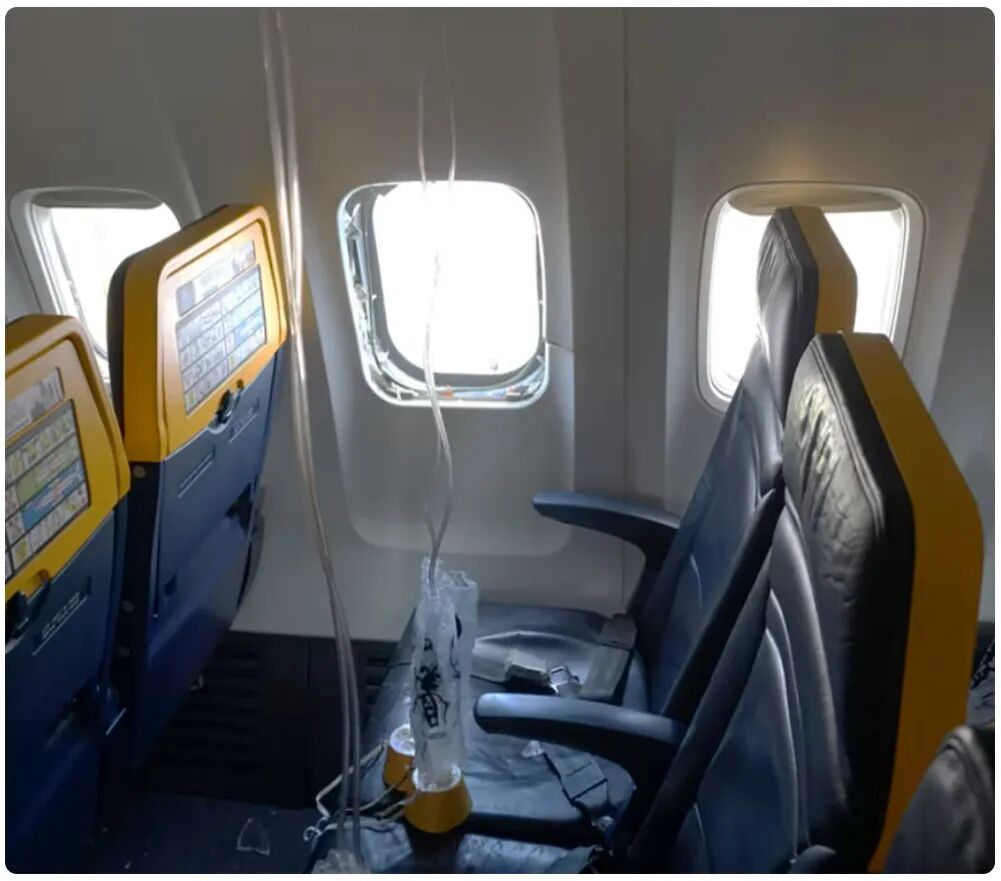
The Ryanair flight departed Thessaloniki, Greece on July 10, bound for Memingen, Germany. Less than 10 minutes after takeoff, the incident occurred, forcing the crew to return to Thessaloniki and make an emergency landing.
According to the wife of Ljubisa Karovic, a passenger seated in 11F, Karovic's head and shoulders were sucked out of the window, sustaining serious injuries. She and the flight attendants worked together to pull him back into the cabin.
The NTSB report indicates that approximately 7.5 minutes after takeoff, the pilots received a warning of excessive engine vibration. Nearly two minutes later, the vibration intensified significantly, and after disengaging the autopilot, the pilots "heard a loud bang."
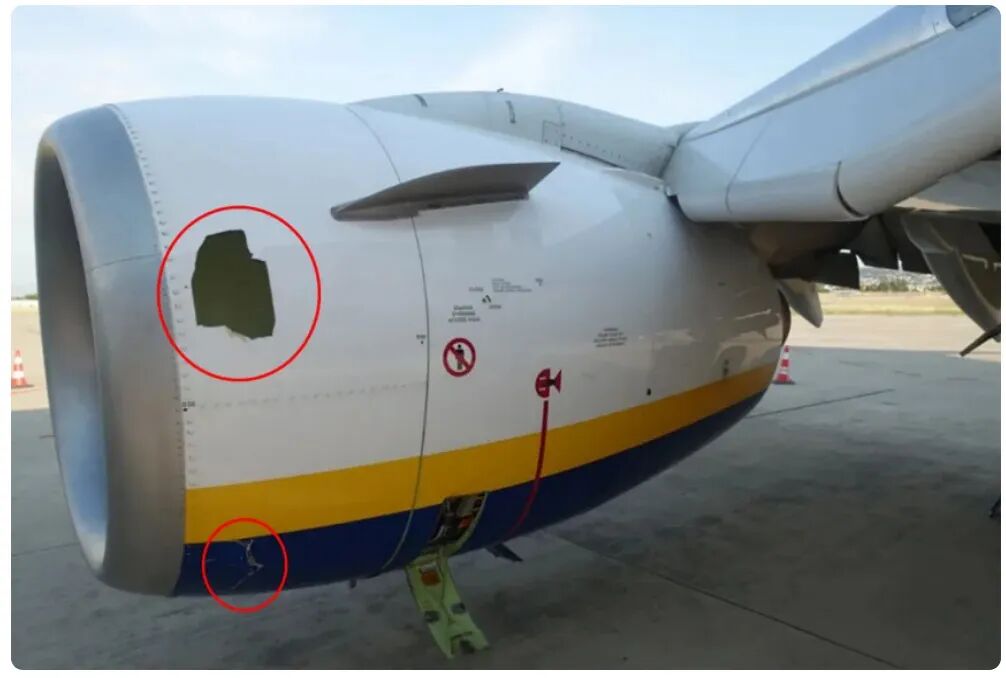
The report stated: "Upon inspection, a fan blade detached from engine number 2 (CFM56-7B26), and engine debris struck the fuselage and right-side horizontal stabilizer."
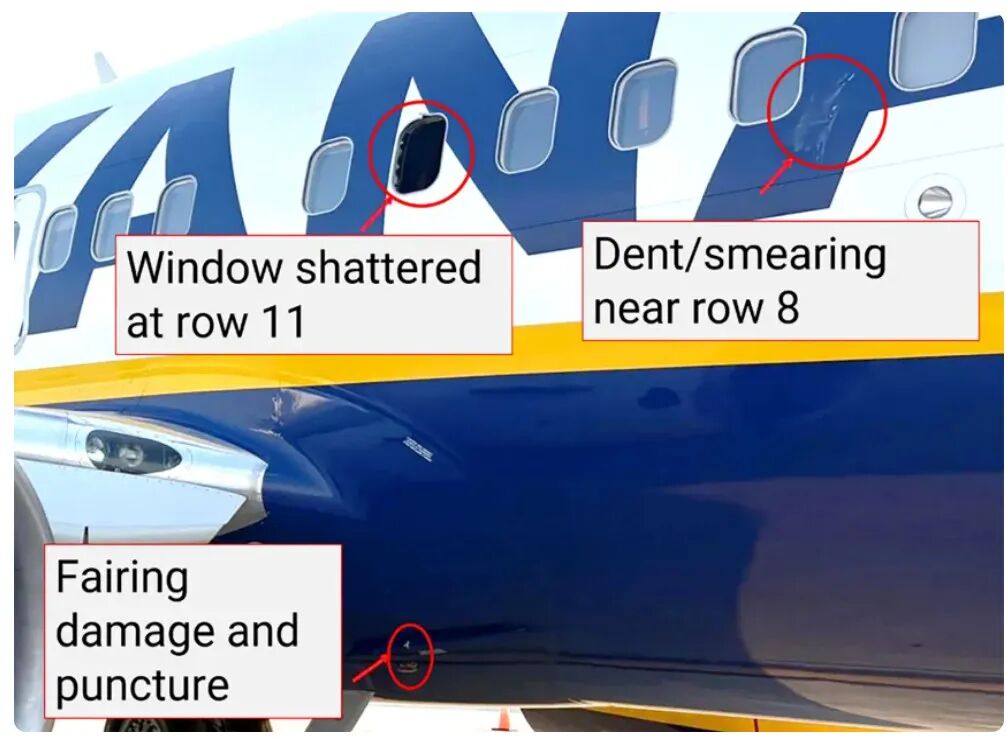
The NTSB stated that the debris penetrated the metal casing surrounding the engine, shattered the 11th row window, left a dent in the fuselage near the 8th row, pierced the fuselage below the wing, and caused scratches and dents to the tail.
 The investigation revealed signs of fatigue cracks on the broken blade fragments-meaning the metal gradually fractured under repeated stress. Eight other blades also showed deformation at their leading edges.
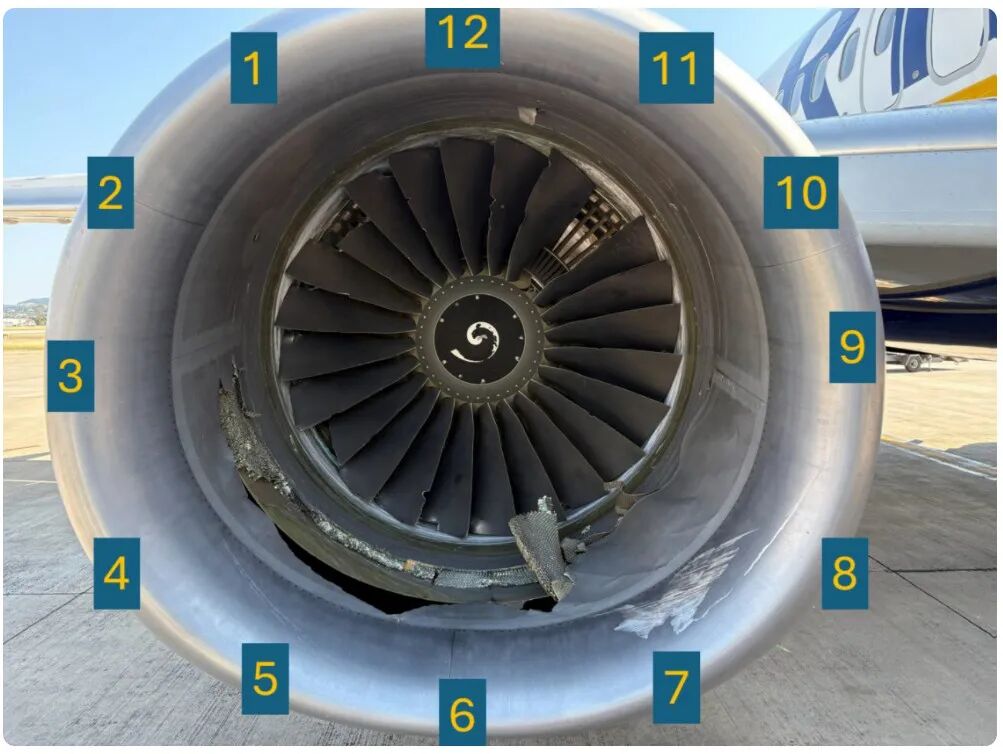
Additionally, bird debris (including feathers) was found inside the damaged engine, but the exact date of the aircraft's most recent bird strike is unclear. In the year prior to the accident, the aircraft had reported four suspected bird strikes, but no damage was found at the time.
The aircraft's fan blades had been inspected less than three weeks before the incident.
The NTSB report noted fatigue cracking and stated that passengers were "partially stuck in the damaged cabin window," and that "other passengers... managed to pull the injured passenger back into the cabin." This statement contradicts what Ryanair CEO Michael O'Leary said during a July earnings call.
O'Leary stated at the time, "There have been some sensational reports that a passenger was half-out of the window, head out. In reality, no one was sucked out of the window." He also stated, "Initial indications suggest that the engine may have been damaged by a foreign object during takeoff from Thessaloniki."
NTSB Chair Jennifer Holmendi criticized O'Leary for commenting before the investigation was complete.
Hormendy stated, "The NTSB is investigating this incident, and according to regulations, authorized representatives and their technical advisors are prohibited from commenting on potential causes of accidents or disclosing information related to the investigation. Mr. O'Leary's public statements violate international rules by offering opinions and analyses on the incident and hinting at directions that might be addressed in the ongoing investigation."
NTSB investigations typically take one to two years to complete, and the final report will determine the probable causes and related factors of the accident.