

To mitigate the impact of flight disruptions, airlines need more than just new technologies.
low price Heliport Touchdown Light,
Solar Low Intensity Type B factory,
Solar Low Intensity Type A factory,
Low Intensity Type B manufacturers,
On August 14, 2026, Civil Aviation Resource Network reported that airlines are heavily investing in optimization technologies and artificial intelligence (AI) to improve the management of flight disruptions, which cost the industry hundreds of millions of dollars annually. Recent high-profile disruptions have resulted in losses between $500 million and $750 million.
However, cost is only one consequence of flight disruptions for airlines; other consequences may include long-term effects such as customer alienation and potential loss of revenue and trust.
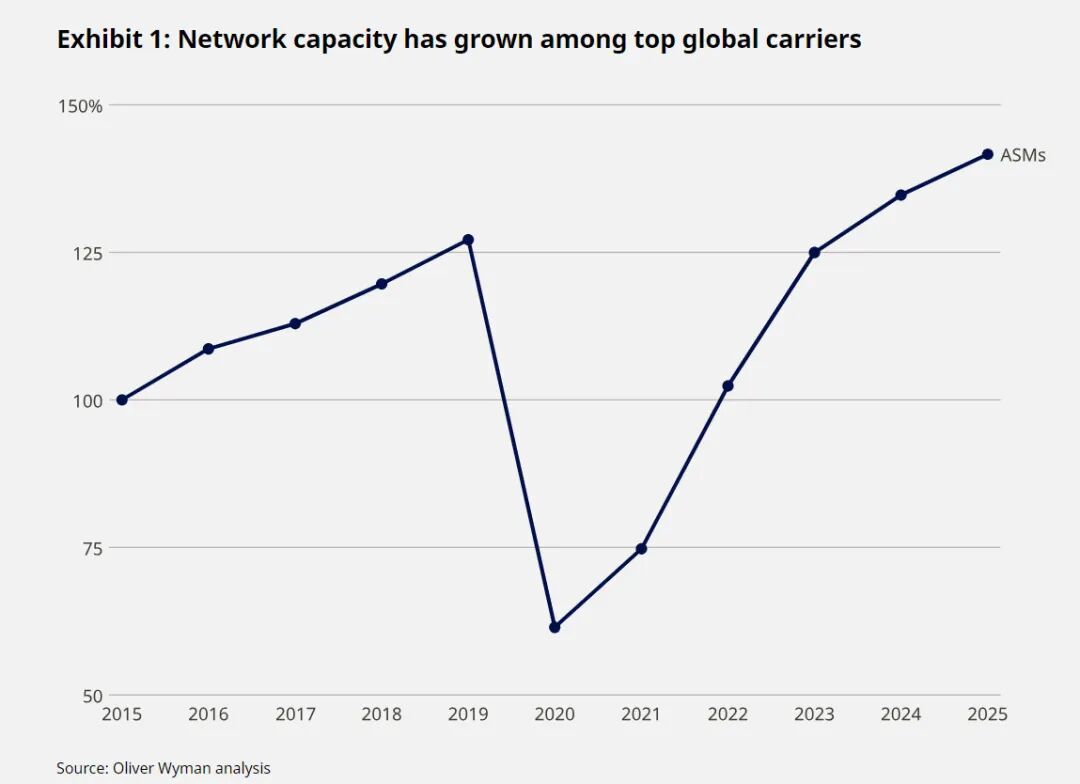
The scope of flight disruptions is linked to the massive growth of the airline industry over the past decade. During this period, the world's top 25 airlines increased their network capacity by an average of over 40%. Today, airlines are attempting to balance growth with the costs associated with flight disruptions through integrated optimization approaches, which are becoming crucial for serving customers, maintaining operational reliability, and ensuring financial sustainability.
While these optimization approaches begin with significant investments in AI and optimization tools, many airlines have found these tools insufficient to effectively manage flight disruptions. To fully reduce costs, optimization efforts must also include building a data foundation, redefining workflows, and managing change.
How Airlines Can Design Operating Models to Cope with Flight Disruptions
A significant portion of this pressure is felt within the Operations Control Center (OCC), where teams manage day-to-day flight operations and respond quickly to disruptions. Historically, flight recovery optimization has been siloed between aircraft, crew, passengers, and maintenance networks. With the advent of more advanced technologies and AI, airlines are eager to connect these previously fragmented solutions to improve efficiency and mitigate risk.
Given the speed of technological change, it's easy to view driving integrated optimization as a purely technical issue. However, to ensure sustainability, airline leadership's strategic focus should be on prudent future-state design, including operating models, workflows, and change management. This is crucial to the success of the transformation.
Better Outage Recovery Protects Revenue and Customer Trust
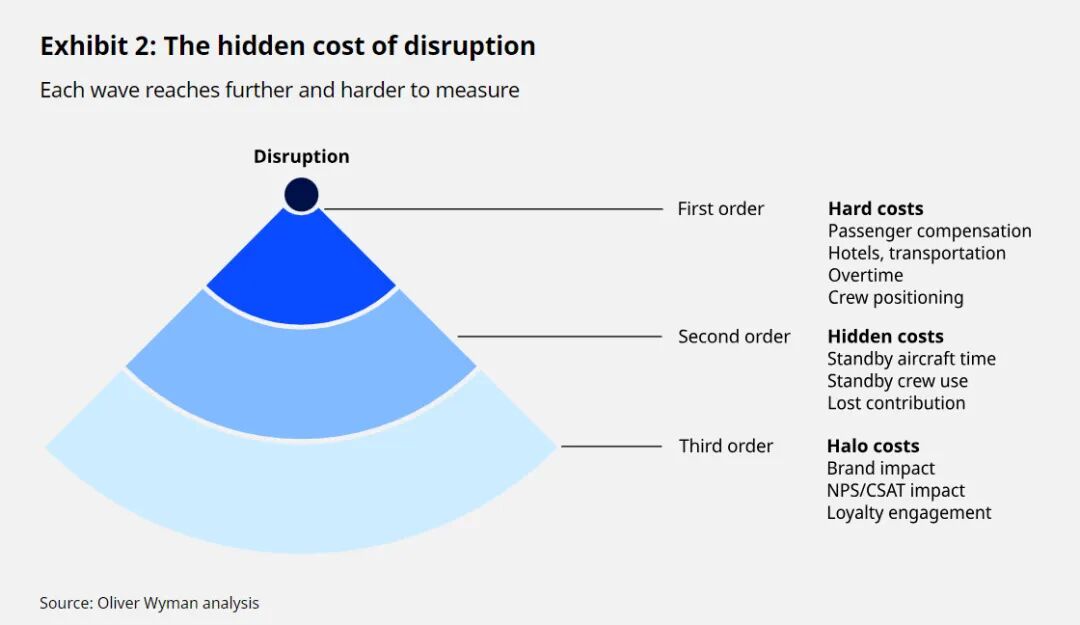
With increasing pressure and rising costs associated with poor outage recovery, the rationale for improving outage management is becoming increasingly compelling. While outages have always been part of airline operations, a single major operational event can now result in hundreds of millions of dollars in losses, making the need for improvement irrefutable. Better outage recovery decisions reduce cancellations, protect revenue, limit compensation and passenger care costs, and help maintain scheduled flight operations.
The customer perspective is equally important. Over 60% of consumers will abandon a brand after a bad experience, rising to 69% among high-income consumers. Passengers may tolerate occasional delays, but their tolerance decreases significantly when communication is poor, relocation is inadequate, outage recovery takes too long, or outages appear to be within the airline's control.
In these moments, operational reliability equates to customer experience. This is why same-day optimization must be a corporate priority, not just an OCC issue.
Outage recovery depends on technology, people, and processes.
But achieving same-day optimization is not easy. While technology decisions are critical and far-reaching, these issues are largely solvable with the right approach and the right partners. Engines and platforms for optimization are mature and rapidly evolving, but airlines often struggle to select the right tools, deploy them effectively, and align their operations around them.
OCC working groups typically have drastically different responsibilities, cultures, and union contracts, requiring careful management of team collaboration and new skills development. Airlines often underestimate the scale of people and process change management required when introducing new technologies; however, cutting-edge technologies are unlikely to be effective without well-defined process support. Airlines also tend to rush technology implementation without adequately designing for the future state, even when significant value can often be unlocked simply by refining workflows and improving team collaboration. In many cases, redesigning processes can yield benefits even while new technologies are still being implemented.
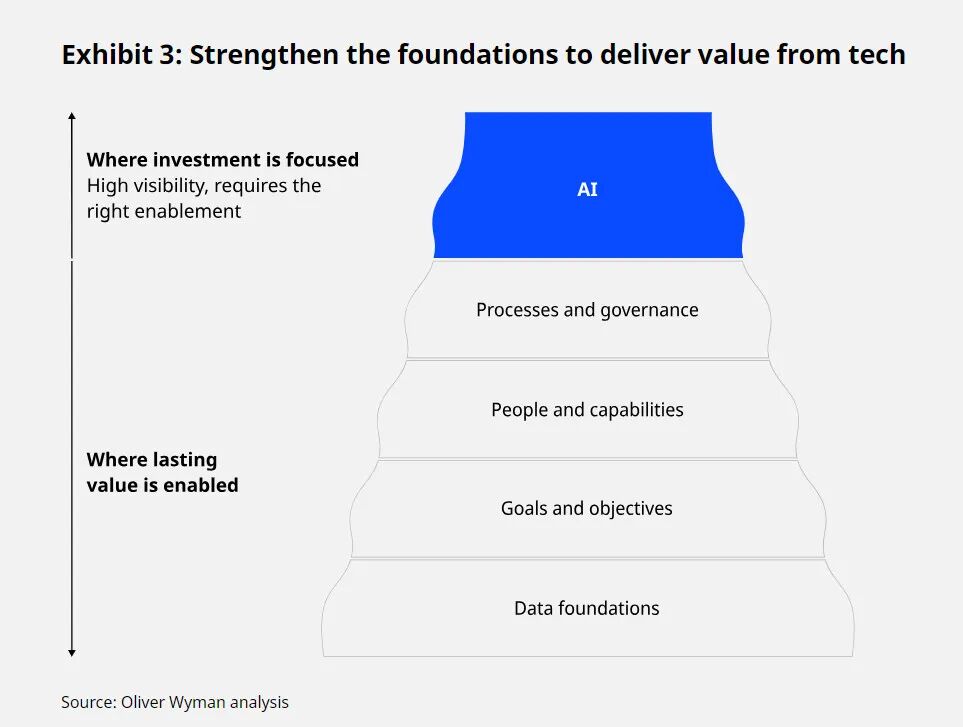
Operational priorities are equally important. The best training, processes, and tools are only effective if strong leadership and clear communication about how the airline's goals and priorities are changing. Inconsistent goals remain common within and even between workgroups, with daily key performance indicators (KPIs) often disconnected from higher-level, defined priorities.
A precise, enterprise-wide set of KPIs and goals helps frontline teams make same-day recovery decisions during flight disruptions, supporting broader business objectives. Unless airlines focus on a holistic future-state design in terms of the data needed, workflows, roles, and how change is managed, technology investments will consistently fall short of expectations.
Two Technology Choices Impacting Long-Term Operational Performance
While data, robust workflows, and change management will determine whether an airline can fully realize the value of its technology investments, certain technology choices have longer-term consequences than others. Two technology choices stand out in particular: building a solid data foundation and identifying which decisions are irreversible.
Airlines must build a solid data foundation before implementing advanced tools, but many airlines have historically underinvested in the data infrastructure needed to unlock the full potential of advanced optimization technologies and AI. Before exploring more complex and multifunctional OCC applications, airlines need to invest heavily in this area.
The benefits extend far beyond OCC. Clear, real-time data on assets, crew, and passengers improves decisions that impact customer experience and operational reliability.
Airlines must also distinguish between one-way and two-way technology decisions. Large operational technology projects can take anywhere from 18 months to 10 years, yet still fail to deliver the required advanced functionality. Therefore, airlines often treat every decision as equally important-but a more useful approach is to differentiate between "one-way doors" and "two-way doors."
One-way door decisions are difficult to reverse and costly. Data models are a prime example. How the system defines core assumptions such as flights, aircraft, or crew members, and how this information is transmitted in operations, must be correct from the outset, as it affects all systems built upon it. In contrast, two-way door decisions can be re-examined over time. Choices such as programming languages or individual tools within a particular category are often far less important than the team's assumptions, and spending too much time deliberating on these reversible decisions only slows progress.
The most effective way to handle these decisions is to have the right partner-one that is not just a technology provider, but one that deeply understands the realities of airline operations and flight disruption recovery. The best partners know where the "one-way doors" are, understand the operational consequences of poor decisions, and can accelerate foundational data work without neglecting day-to-day operations.
This combination of technical expertise and operational understanding helps airlines avoid costly detours and move forward with greater confidence. Making the right choices in this area frees up airline leadership to focus on the people, processes, and organizational changes that ultimately determine the success or failure of the transformation.
How Airlines Can Build Better Flight Disruption Recovery Strategies
Airlines that do this correctly will not simply be those with better algorithms. They will be those that can quickly align business, operations, crew, passenger, and maintenance priorities under pressure, transparently make trade-offs, and consistently execute flight disruption recovery decisions across working groups. Technology plays a crucial role, but clear decision-making authority, enterprise-wide KPIs, a shared data foundation, and operational routines that teams can rely on when plans begin to be disrupted are equally important.
This is precisely where the focus on people and processes is most critical. Advanced tools are becoming increasingly readily available. The more difficult-to-replicate advantage lies in an organization's ability to effectively utilize these tools in real time.
Airlines that can build this capability will turn operational disruptions into opportunities to strengthen cost control, enhance resilience, and win customer trust. Those airlines that merely view these tools as technology acquisition activities may be missing out on their greatest value.