

The black box data may be missing. South Korean officials confirmed that there were bird feathers in both engines of the Jeju Air crashed plane
Cheap taxiway alarm light,
taxiway alarm light price,
Center hold light factory,
Threshold light suppliers.
According to CCTV News, on January 25, local time, the Ministry of Land, Infrastructure and Transport of South Korea confirmed that bird feathers and blood were found in both engines of the Jeju Air Flight 7C2216 passenger plane that crashed on December 29, 2024. The Ministry of Land, Infrastructure and Transport of South Korea also stated on the 25th that the pilot of the crashed Jeju Air passenger plane issued a "MAYDAY" distress signal due to a bird strike when the plane landed.
Previously, South Korean officials have confirmed that the two black boxes of the crashed Jeju Air passenger plane did not record the key 4 minutes of data before the passenger plane hit the concrete facilities at the end of the airport runway. Some analysts pointed out that the two engines of the crashed passenger plane lost power due to a bird strike, which may be the reason why the black box stopped recording.
In addition, the Ministry of Land, Infrastructure and Transport of South Korea only stated on January 7 that bird feathers were found in one of the engines of the crashed passenger plane. South Korean local media reported on January 17 that bird feathers were found in both engines of the crashed passenger plane, but South Korean officials did not confirm the relevant content until the 25th.
Bird feathers found in both engines of the crashed Korean passenger plane, and the two black boxes may have stopped recording because of this
Some analysts pointed out that if there was a collision with birds, both engines of the passenger plane would fail, causing the power supply of the passenger plane to be interrupted, and the possibility of the black box stopping recording without power supply is increasing.
The Ministry of Land, Infrastructure and Transport of South Korea said on January 11 that after analysis, the two black boxes of the crashed passenger plane stopped recording data after the crew called for help at 8:59, and the data until the crash of the passenger plane at 9:03 was missing.
According to the accident investigation committee, there was no power auxiliary device in the crashed passenger plane that could provide power to the black box.
According to CCTV News, on January 25, local time, the Ministry of Land, Infrastructure and Transport of South Korea confirmed that bird feathers and blood were found in both engines of the Jeju Air Flight 7C2216 passenger plane that crashed on December 29, 2024. The Ministry of Land, Infrastructure and Transport of South Korea also stated on the 25th that the pilot of the crashed Jeju Air passenger plane issued a "MAYDAY" distress signal due to a bird strike when the plane landed.
Previously, South Korean officials have confirmed that the two black boxes of the crashed Jeju Air passenger plane did not record the key 4 minutes of data before the passenger plane hit the concrete facilities at the end of the airport runway. Some analysts pointed out that the two engines of the crashed passenger plane lost power due to a bird strike, which may be the reason why the black box stopped recording.
In addition, the Ministry of Land, Infrastructure and Transport of South Korea only stated on January 7 that bird feathers were found in one of the engines of the crashed passenger plane. South Korean local media reported on January 17 that bird feathers were found in both engines of the crashed passenger plane, but South Korean officials did not confirm the relevant content until the 25th.
Bird feathers found in both engines of the crashed Korean passenger plane, and the two black boxes may have stopped recording because of this
Some analysts pointed out that if there was a collision with birds, both engines of the passenger plane would fail, causing the power supply of the passenger plane to be interrupted, and the possibility of the black box stopping recording without power supply is increasing.
The Ministry of Land, Infrastructure and Transport of South Korea said on January 11 that after analysis, the two black boxes of the crashed passenger plane stopped recording data after the crew called for help at 8:59, and the data until the crash of the passenger plane at 9:03 was missing.
According to the accident investigation committee, there was no power auxiliary device in the crashed passenger plane that could provide power to the black box.
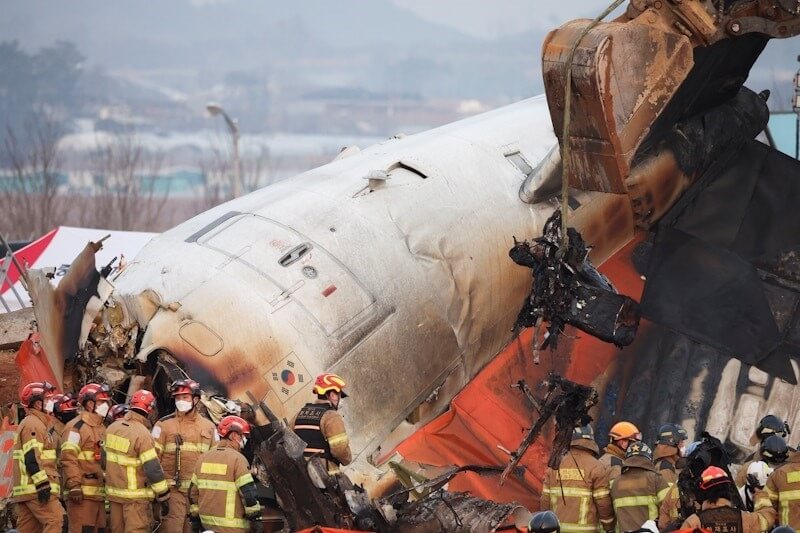
Both black boxes did not record, and the "critical 4 minutes data" of the Korean passenger plane crash was missing
On the afternoon of January 11, the Ministry of Land, Infrastructure and Transport of South Korea stated that the two "black boxes" of the crashed Jeju Air passenger plane in South Korea had stopped recording in the "critical 4 minutes" before it hit the concrete facilities at the end of the runway and exploded and caught fire. Relevant agencies said they would investigate the reasons for the missing data.
At 8:57 a.m. local time on December 29, 2024, the tower of Muan International Airport in Jeolla South Province, South Korea, issued a bird strike warning to the passenger plane in the accident;
At 8:59 a.m. local time on December 29, 2024, the crew of the passenger plane issued a "MAYDAY" distress signal (starting four minutes before the crash);
At 9:03 a.m. local time on December 29, 2024, the passenger plane landed on the runway with its belly without the landing gear lowered and slid at high speed. Finally, it collided violently with the concrete facilities at the end of the runway where the aircraft navigation signal system antenna was installed, and then exploded and caught fire. (Passenger plane crash)
On December 29, 2024, local time, Jeju Air Flight 7C2216 from Bangkok, Thailand, crashed while landing at Muan Airport in Jeolla South Province, South Korea. Except for 2 flight attendants who were rescued, all 179 of the 175 passengers and 6 crew members on board were killed.
Both black boxes did not record, and the "critical 4 minutes data" of the Korean passenger plane crash was missing
On the afternoon of January 11, the Ministry of Land, Infrastructure and Transport of South Korea stated that the two "black boxes" of the crashed Jeju Air passenger plane in South Korea had stopped recording in the "critical 4 minutes" before it hit the concrete facilities at the end of the runway and exploded and caught fire. Relevant agencies said they would investigate the reasons for the missing data.
At 8:57 a.m. local time on December 29, 2024, the tower of Muan International Airport in Jeolla South Province, South Korea, issued a bird strike warning to the passenger plane in the accident;
At 8:59 a.m. local time on December 29, 2024, the crew of the passenger plane issued a "MAYDAY" distress signal (starting four minutes before the crash);
At 9:03 a.m. local time on December 29, 2024, the passenger plane landed on the runway with its belly without the landing gear lowered and slid at high speed. Finally, it collided violently with the concrete facilities at the end of the runway where the aircraft navigation signal system antenna was installed, and then exploded and caught fire. (Passenger plane crash)
On December 29, 2024, local time, Jeju Air Flight 7C2216 from Bangkok, Thailand, crashed while landing at Muan Airport in Jeolla South Province, South Korea. Except for 2 flight attendants who were rescued, all 179 of the 175 passengers and 6 crew members on board were killed.