

The evolution of the eVTOL industry – is it finally taking off?
Customized inset aiming light,
Heliport inset FATO suppliers,
low price Heliport inset FATO,
heliport TLOF light suppliers.
Financial woes at Germany's Lilium and Volocopter have investors and others wondering whether eVTOLs, once seen as the future of climate-friendly short-haul aviation, are failing before they even take off.
In November 2024, Lilium filed for bankruptcy in the U.S. and liquidation in Germany after failing to secure loan guarantees from the German federal and Bavarian state governments. Founded in 2015, Munich-based Lilium has raised more than $1 billion. At the time, Lilium said it had received orders, reservations and options for 780 aircraft worldwide, with two already on the production line. There are signs the company may find a way out, either through new investors or loans.
Meanwhile, Volocopter, which was founded in 2011 and has raised more than $700 million, has also fallen into bankruptcy and is seeking investors.
"The recent bankruptcies seem to have brought some pessimism, but like other areas of innovation, there's always an initial frenzy of excitement followed by some downturns," said Dan Sloat, founder and president of the Advanced Air Mobility Institute (AAMI). "Hopefully we are coming out of the doldrums."
While Lilium and Volocopter are facing difficulties, other eVTOL players have attracted huge investments. In mid-February, Archer Aviation announced that it had raised another $300 million in funding, including funds and accounts managed by Blackstone, bringing Archer Aviation's total liquidity to approximately $1 billion. The successful financing follows the establishment of a dedicated defense applications division in December 2024, and the hybrid vertical take-off and landing aircraft is expected to be Archer Aviation's first product.
Meanwhile, US-based Joby Aviation has raised more than $722 million in the past six months, including a commitment of $500 million from strategic manufacturing partner Toyota of Japan.
"We were able to successfully raise funds thanks to our demonstrated progress in bringing aircraft to market. Joby continues to lead the industry in obtaining FAA type certification, launching initial operations in Dubai, and producing and flying four aircraft on the assembly line in Marina, California," said Eric Allison, chief product officer of Joby.
Despite Archer and Joby's success, the eVTOL industry has seen considerable consolidation, and more is expected to come. AAMI's Sloat estimates that at one point there were nearly 1,000 different eVTOL concepts, and now that's down to about 300.
"Creating something new is always hard, and building advanced aircraft is resource intensive in both time and money… Some consolidation is natural, but I'm always a fan of people who are trying to do hard things well and push the envelope," said Adam Goldstein, CEO of Archer Aviation.
One of the biggest challenges is the magnitude of investment required, especially in infrastructure. AAMI's Sloat conservatively estimates that at least $1 billion needs to be raised to have a chance of success.
"And it's crazy to say that it's not clear that $1 billion is enough," he said.
The Middle East is emerging as a key player in the industry. "The UAE and the Kingdom of Saudi Arabia have made it clear that they want to be global leaders in this space. They have the necessary resources, and it's a clear value enhancement for their cities," Sloat said.
Archer said it has signed "multi-party partnership agreements" with a number of key entities in the UAE, focused on establishing electric air taxi operations in Abu Dhabi.
"We expect to begin operations as early as the end of this year," Goldstein said.
Archer also plans to launch operations in Los Angeles and New York.
Joby's electric air taxi is in the final stages of the FAA certification process, and it is preparing to begin flight testing with FAA pilots. Joby said it has flown more than 33,000 miles of test flights with full-scale prototypes since 2017, including more than 100 flights with pilots on board.
Joby plans to launch service in Dubai, possibly later this year. The company has also conducted demonstration flights in South Korea and Japan.
"We expect to begin rolling out our service post-certification, starting with New York City and Los Angeles, and then expanding to other markets around the world," Allison said. "In addition to planning for our Dubai operations, we have applied to have our FAA type certificate (once awarded) confirmed by regulators in Australia, Japan and the United Kingdom," he said.
Travel Industry Partnerships
As part of its roadmap to success, Joby is partnering with the travel industry, having established "demand generation and customer experience partnerships" with both Uber and Delta Airlines. The partnership with Uber began when the ground transportation company published a white paper in 2015 on an on-demand air transportation concept called Elevate. In December 2020, Joby acquired Elevate.
Uber and Delta Airlines are not the only travel companies eyeing eVTOLs. In June 2021, Virgin Atlantic announced a deal with eVTOL startup VerticalAerospace to accelerate zero-emission air travel, with Virgin placing an optional order for 150 eVTOL aircraft. United Airlines has also expressed interest in developing the eVTOL industry.
But what will the new US President Trump think of eVTOLs, especially now that he has made it clear that he loves oil?
Archer's Goldstein said he firmly believes that the new Trump administration will be positive about eVTOLs.
"Improving aviation safety, innovation and affordability are topics that most people in Washington agree on. We're seeing support from President Trump, Secretary Duffy and others for eVTOL aircraft," he said.
Sloat agreed. "It feels like, 'Let's prioritize this industry because it's an opportunity to beat China,' almost regardless of its potential to reduce climate change," he said.
Will consumers use eVTOLs?
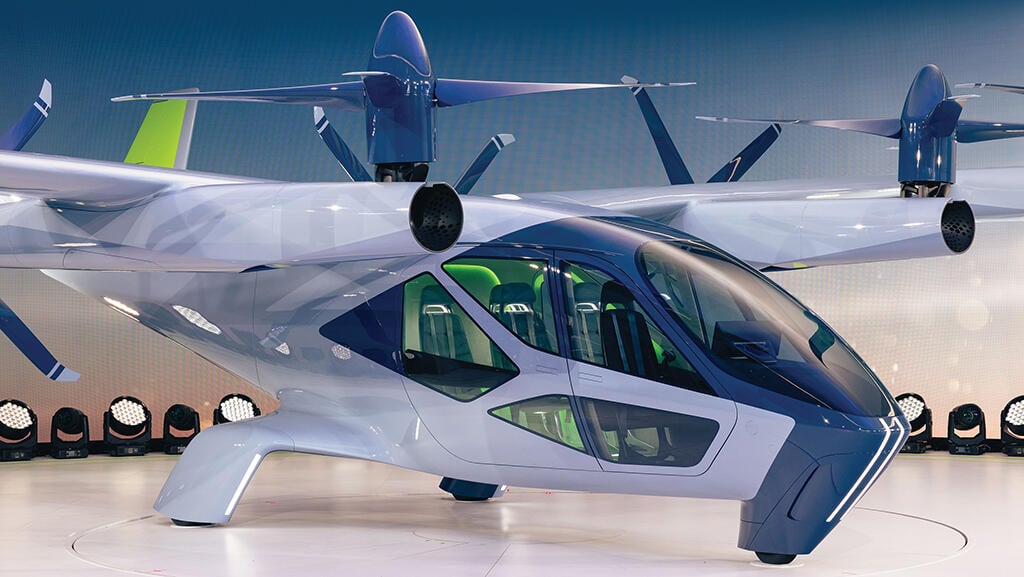
Despite a few bankruptcies, investors seem ready to support an eVTOL future, but what about the traveling public? Sloat said it will be critical to convince the public of the safety of eVTOLs, especially after the recent mid-air collision between a passenger plane and a helicopter in busy Washington airspace. He said safe operation of eVTOLs will require the implementation of so-called universal traffic management, an artificial intelligence (AI)-based approach to air traffic control.
"We are at a tipping point where traffic density and its safety implications mean that voice-only communications and separations are becoming increasingly difficult," he said. "No single controller can realistically handle more than 100 aircraft at once. AI is absolutely critical."
Sloat estimates the eVTOL market could be worth $30 billion by 2030, after commercial service starts as early as this year.
Joby's Allison said he sees "a huge market opportunity for electric air taxis."
"And the important thing to note is that it's way bigger than the helicopter market and really not comparable to anything that exists today."