

Two Indian engineers invented an AI-powered airplane airbag
Medium intensity obstruction light A type factory,
Medium intensity obstruction light type A factory,
High intensity obstruction light B type suppliers,
low price High intensity obstruction light B type.
According to ZME Science, commercial aviation is already the safest mode of transportation on Earth. However, in the extremely rare event of a plane crash, all bets are off. The odds of survival are slim to none. But two young Indian engineers posed a thought-provoking question: What if we could significantly improve the chances of surviving an air crash?
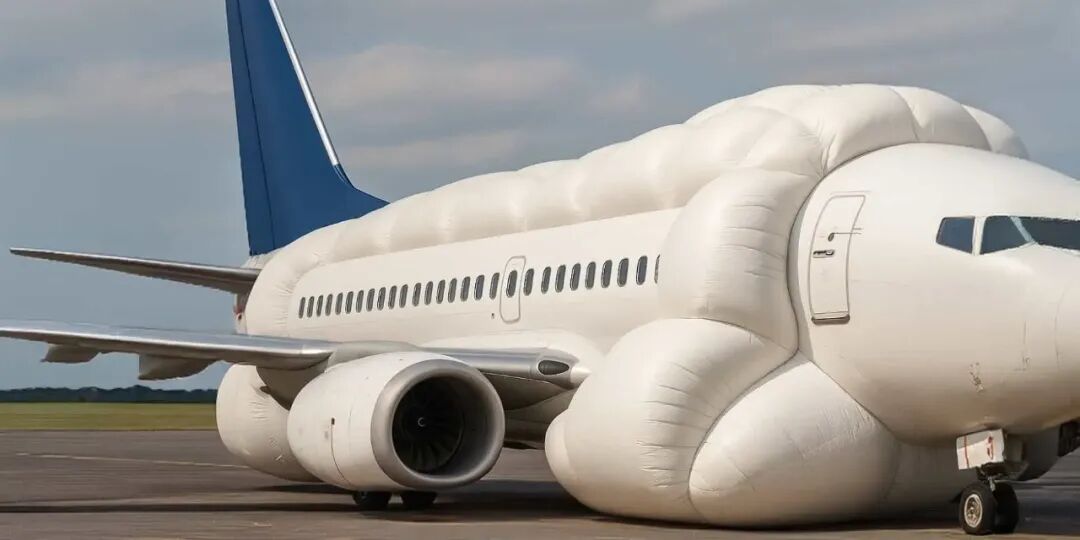
Their answer is Project REBIRTH-an aircraft that inflates into a protective cocoon resembling a "Michelin Man" seconds before impact. This invention, created by engineers Eshel Wasim and Dharsan Srinivasan of the Birla Institute of Technology in India, has been shortlisted for the 2025 James Dyson Award. They call it the "first AI-powered air crash survival system."
Invention Born Out of Tragedy
The idea stemmed from the heartbreak of a tragic air crash. Earlier this year, Air India Flight 171 took off from Ahmedabad bound for London. Thirty seconds later, a fuel control switch mysteriously tripped, causing the engines to lose power. It was the deadliest air disaster in a decade, with only one survivor of the 242 people on board.
Srinivasan's mother remains haunted by the incident, constantly imagining what the passengers must have felt. "That feeling of helplessness haunts us. Why didn't we have a system for post-crash survival?" he explained in his Dyson Award application. Wasim was equally deeply moved. "My mother couldn't sleep, constantly thinking about the terror the passengers and pilots felt, knowing there was no escape."
This overwhelming feeling of helplessness propelled Srinivasan and Wasim into months of design work. "The REBIRTH program is not only an engineering innovation, but also a response to grief. It promises that life can be planned, that there is a second chance after failure."
How Aircraft Airbags Work
The REBIRTH system begins operating the moment the aircraft lifts off the ground. A network of sensors continuously monitors altitude, speed, engine status, and pilot response, and onboard AI processes the data in real time. If the system determines a crash is unavoidable below 3,000 feet, it deploys within two seconds.
Airbags deploy from the nose, belly, and tail of the aircraft, inflating the fuselage outward until the entire aircraft resembles a flying bouncy castle. The multi-layered airbags are constructed from Kevlar, TPU, and Zylon fiber, and lined with a "non-Newtonian fluid"-a material that stiffens under sudden force. Simulations have shown that this design reduces impact forces by over 60%.
If the engines are still running, reverse thrusters automatically activate to reduce speed by 20%. If an engine fails, gas boosters activate to slow the aircraft's descent and stabilize the aircraft. After impact, the system transmits an infrared beacon, GPS coordinates, and a flashing signal-complete with a bright orange paint job-to ensure rescuers can quickly identify survivors.
"This is a last-ditch effort to prepare for the worst-case scenario," say the two inventors.